Raw vs Cooked Weight: Why 100g of Rice Completely Changes Calories
Discover how water absorption and evaporation alter caloric density during cooking, and learn whether you should track food raw or cooked.
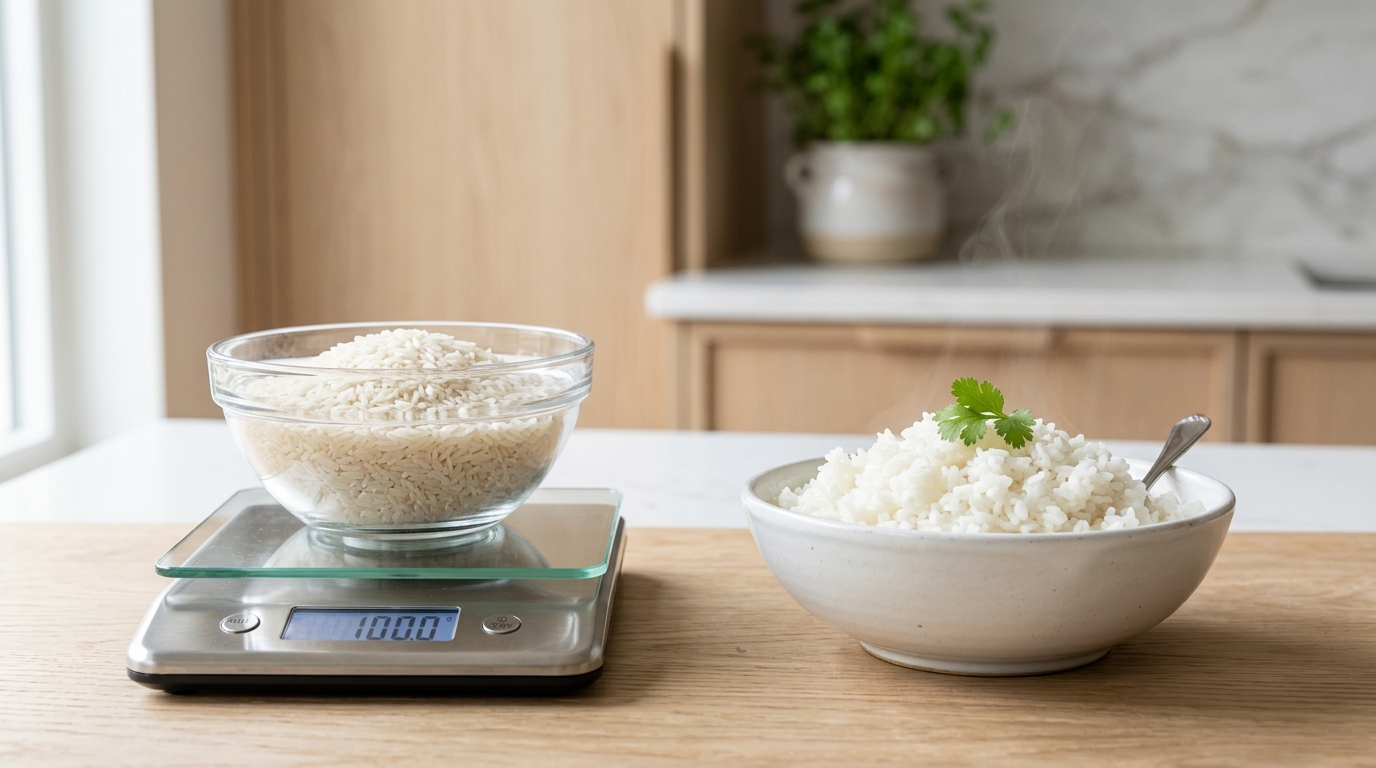
The Hydration Dilemma in Macro Tracking
One of the most frequent errors in nutritional calculation occurs when dieters weigh foods cooked while recording their nutritional values as raw (or vice-versa).
Water has zero calories. However, when food absorbs or loses water during culinary preparation, its caloric density per 100 grams changes drastically.
The Rice & Pasta Multiplier
When dry white or brown rice is boiled, starch granules gelatinize and absorb between 2.0 to 3.0 times their dry weight in water:
- 100g of raw, dry white rice: ~360 kcal | 80g Carbohydrates | 7g Protein | 0.6g Fat
- 100g of cooked white rice: ~130 kcal | 28g Carbohydrates | 2.5g Protein | 0.3g Fat
If you cook 100g of dry rice, it yields approximately 250g to 300g of cooked rice. If you log 250g using raw entries, your tracker will register 900 kcal instead of the actual 360 kcal!
Meat and Protein Evaporation
The inverse dynamic occurs with animal proteins:
- Raw meats contain between 65% and 75% water.
- Grilling, baking, or pan-searing causes moisture evaporation alongside rendered fat loss.
- A raw 200g chicken breast typically shrinks down to 150g cooked.
Because water evaporates, the nutrient density per 100g increases:
- 100g raw chicken breast: ~120 kcal | 22.5g Protein | 2.6g Fat
- 100g grilled chicken breast: ~165 kcal | 31.0g Protein | 3.6g Fat
Best Practices for Error-Free Logging
- Log raw whenever possible: Raw weight provides the least variable measurement because cooking duration and heat levels vary dramatically between kitchens.
- Match the database entry strictly: If weighing cooked food, verify that the entry explicitly states “cooked”, “boiled”, or “broiled”.
- Batch cooking formula: Weigh the raw total before cooking, weigh the finished cooked batch total, and calculate your individual portion percentage accordingly.